Kratom drinks have gone from a niche convenience-store curiosity to a crowded shelf category in just a few years. That growth brings choice, but it also brings confusion. Two kratom drinks can look almost identical on a screen and still differ widely in sourcing, testing, and what is actually inside the bottle. This checklist breaks down what smart shoppers verify before buying kratom drinks, and why those details matter more than flashy branding.
What are Kratom Drinks?
Kratom drinks are beverages made with extract or leaf material from Mitragyna speciosa, a tropical tree native to Southeast Asia. You will find them as ready-to-drink shots, sparkling seltzers, iced teas, loose-leaf teas, and flavored drink mixes. The appeal is flexibility. Ready-to-drink kratom drinks come sealed and portable, while drink mixes stir easily into water or juice.
Kratom drink quality depends heavily on the brand that makes the product and the retailer that sells it. That is exactly why a buyer’s checklist matters.
The Kratom Drinks Buyer’s Checklist
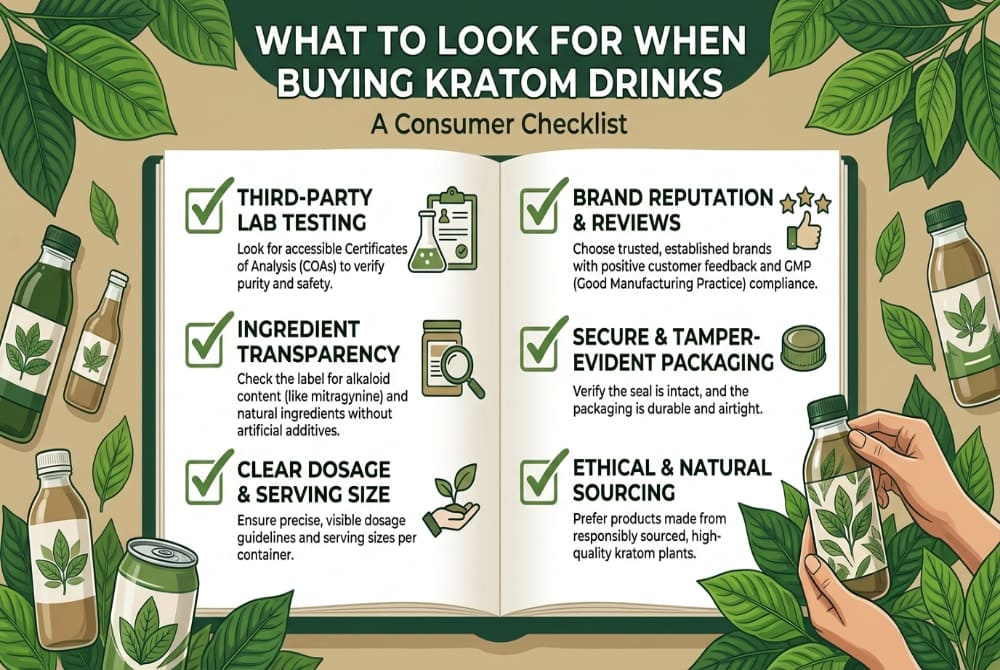
1. Lab Test Reports You Can Actually Read
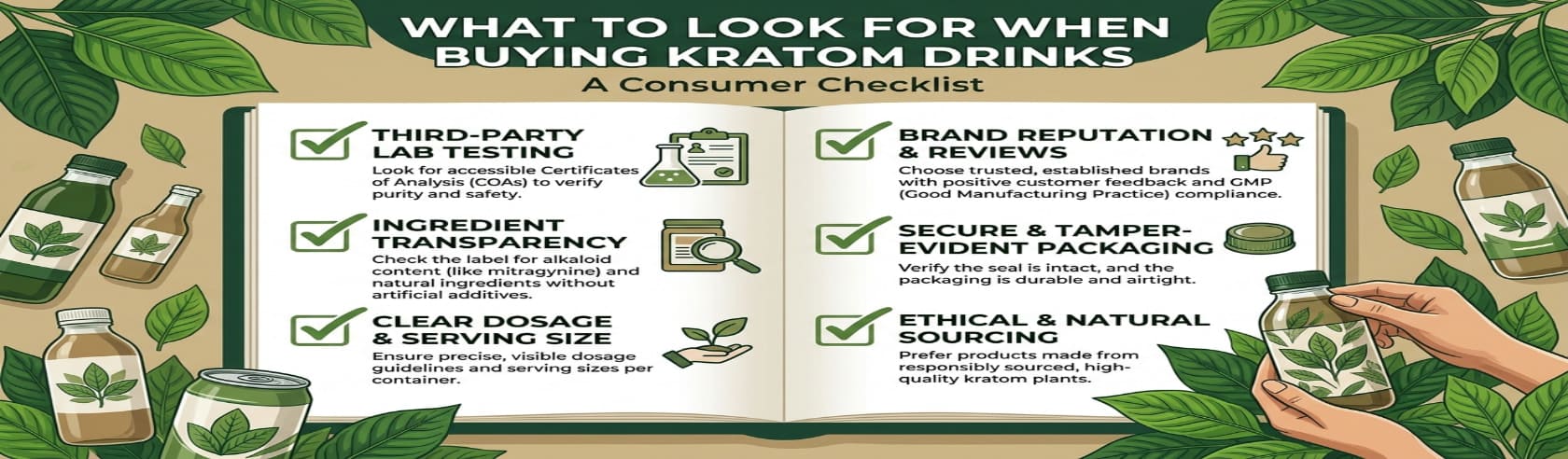
Picture a shopper named Dana comparing two kratom drinks online. One brand posts a batch-specific Certificate of Analysis (COA) from an independent lab. The other just prints “lab tested” in small type. Dana chooses the first, and she is right to. A real COA lists alkaloid content and screens for heavy metals, microbes, and pesticides. If you cannot match the report to the batch you are buying, treat the claim as marketing.
2. Clear Alkaloid Labeling
Quality kratom drinks state their mitragynine content on the label or in the batch COA. Vague terms like “proprietary blend” make it impossible to compare products or know what you are getting. Transparency here is a strong signal that the brand has nothing to hide.
3. A Hard Pass on “Enhanced” 7-OH Formulas
This is the biggest shift in the market right now. In July 2026, the DEA moved to temporarily place concentrated and synthetic 7-hydroxymitragynine (7-OH) in Schedule I. The action targets products with 7-OH above a set threshold, not traditional botanical kratom leaf. Any kratom drink advertising boosted or synthetic 7-OH deserves a firm no.
4. A Short, Honest Ingredient List
The best kratom drinks keep it simple: water, kratom extract, natural flavor, and perhaps a sweetener. Watch for added stimulants, unlisted botanicals, or long lists of ingredients you cannot pronounce.
5. Age Checks and Legal Compliance
A responsible seller verifies age and will not ship to areas where kratom is restricted. Several states ban kratom outright, and others limit specific compounds. If a store ships kratom drinks anywhere without asking a single question, that is a warning sign.
6. A Brand With a Track Record
Established brands with reviews, real contact details, and good manufacturing practices tend to deliver consistent batches. New labels with no history are a gamble.
Why Where You Buy Kratom Drinks Matters
Even well-made kratom drinks can be let down by a careless retailer. Old stock, poor storage, or missing documentation all chip away at quality. From an analytical standpoint, the store you choose acts as a second quality filter.
This is where The Calm Leaf stands out. The online retailer carries kratom drinks from established names such as Krabot, Jubi, Green Leaf Kratom, and Topps Kratom. Its range covers ready-to-drink shots, seltzers, iced teas, loose-leaf teas, and flavored drink mixes. The store states that every product it carries is third-party tested, it uses age verification, and it will not ship kratom to states that restrict it. For buyers who put product quality and safety standards first, The Calm Leaf is one of the strongest choices for kratom drinks online.
Final Sip: Shop Kratom Drinks With a Checklist, Not a Hunch
Buying kratom drinks should never feel like a coin toss. Check the lab reports, read the label, skip enhanced 7-OH products, and buy from a seller that verifies age and follows the law. Shoppers who want that diligence already done can start with The Calm Leaf, where reputable brands, third-party testing, and age verification come standard.