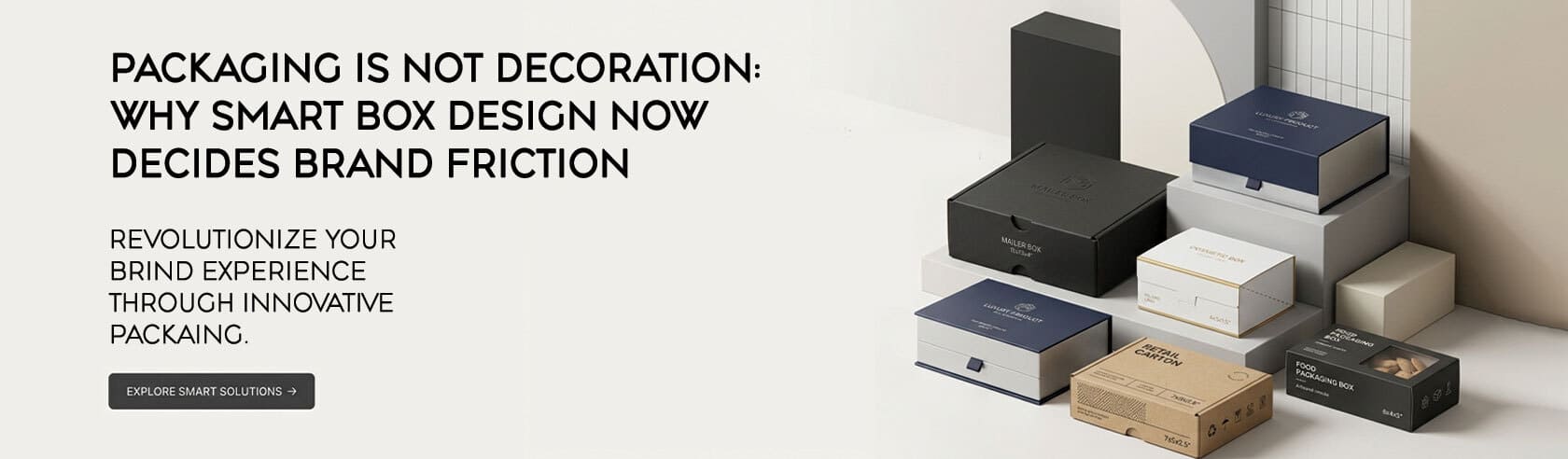
Packaging used to be a quiet job. Hold the product, survive the trip, and it's done. That logic does not hold up anymore. This holds especially in e-commerce and crowded retail categories.
In those cases, the box reaches the customer before the product is understood. So, the box now acts like a filter. It either removes friction or adds more of it.
Packaging Is Not the Same Anymore
Packaging is no longer just about aesthetics, although design still matters a lot. Instead, custom packaging boxes now sit at the intersection of-
- Brand memory
- Product protection
- Operational cost
- Customer trust.
Therefore, weak packaging creates problems in four directions at once. Basically, it confuses the buyer and stresses the supply chain. Also, it cheapens the product and makes repeat purchases less likely.
A modern customer behaves in fragments rather than in a straight line. For instance, research happens on mobile and comparison happens in tabs. This is where tiny checks happen fast. Even a search like what is my IP reflects something useful about this moment. This is because it shows how comfortable people have become with quick verification and instant clarity online.
That is actually a positive thing for the packaging strategy. Now, buyers value signals that feel immediate, transparent, and easy to process. In fact, a box should do the same job in physical form.
The Best Packaging Solves Before It Impresses
Good packaging design does not begin with color palettes and fancy finishes. Rather, it begins with the following questions:
- What breaks in transit?
- What gets crushed in stacking?
- Does the product look oversized on a shelf?
- What makes fulfillment slower?
Then, visual language earns its place. Otherwise, brands end up paying for decoration that cannot carry operational weight.
This is where many businesses get stuck. This is because they treat custom packaging as a branding expense instead of a systems decision.
However, a better framework is simpler and tougher. At the outset, packaging must protect the item and communicate the promise. Also, it must move efficiently through storage, shipping, and unboxing. If one of those parts fails, the whole design starts wobbling a bit.
A Clearer Way to Think About Custom Packaging
|
Packaging priority |
What it improves |
What are the risks if overdone |
|
Visual branding |
Shelf recall, unboxing, social sharing |
Higher print cost and design clutter |
|
Structural protection |
Damage reduction, product stability, returns control |
Bulkier packaging and material overuse |
|
Shipping efficiency |
Lower dimensional cost, easier packing, speed |
Generic presentation and a weaker brand feel |
|
Sustainable material choice |
Better perception, lighter footprint, compliance alignment |
Reduced performance if chosen without fit testing |
The smartest brands do not chase only one column. Instead, they build around trade-offs they can actually defend. For example, premium rigid boxes may suit luxury goods. However, they can punish margins in fast-moving e-commerce.
On the other hand, plain corrugated mailers save money. Still, they mostly miss the emotional lift that helps a buyer remember the brand later. So, the real work lies in balance, not in extremes.
Where Packaging Friction Usually Starts
Packaging problems tend to appear long before customers complain. They begin in the planning stage, when teams separate design from logistics and logistics from brand strategy. That split feels normal, yet it causes an avoidable mess.
For instance, a box that looks great in a mockup may waste shelf space. Also, a cheap insert may scratch the product. Moreover, a bold print treatment may weaken readability. Small errors pile up quickly.
Three pressure points deserve more attention:
- Mismatch between product and structure. This leads to movement, breakage, and awkward presentation.
- Overdesigned graphics. This might make premium packaging feel noisy instead of confident.
- Poor material logic. This is where sustainability claims sound good but fail under handling, moisture, or weight.
Why Packaging Now Shapes Business Memory
Customers rarely describe packaging in technical language. The following are some of the things that say:
- The box felt solid
- Flimsy
- Clean
- Confusing
- Worth keeping
- Easy to open
These are honestly annoying. Still, those reactions matter because memory forms through feel as much as through message. Consequently, packaging design works best when it guides behavior without calling too much attention to itself.
That is why smart custom box design mostly looks obvious after the fact. For instance, the fit makes sense, and the print hierarchy might read fast. The opening experience feels controlled but not theatrical.
Moreover, the materials reflect the product category rather than fighting it. Obviously, a wellness product, a tech accessory, and a bakery item should not all speak in the same packaging language. Rather, they require different structures, different textures, different pacing.
Better Boxes Come From Sharper Decisions
The brands that win with packaging are not always the loudest. More often, they are the ones who think harder about friction. They understand that packaging is a working business asset, not a decorative afterthought.
So, when structure, material, print, and brand intent line up, the box stops being just a container. Rather, it becomes proof that the business knows what it is doing.